I'm Gamifying My Channel for Growth
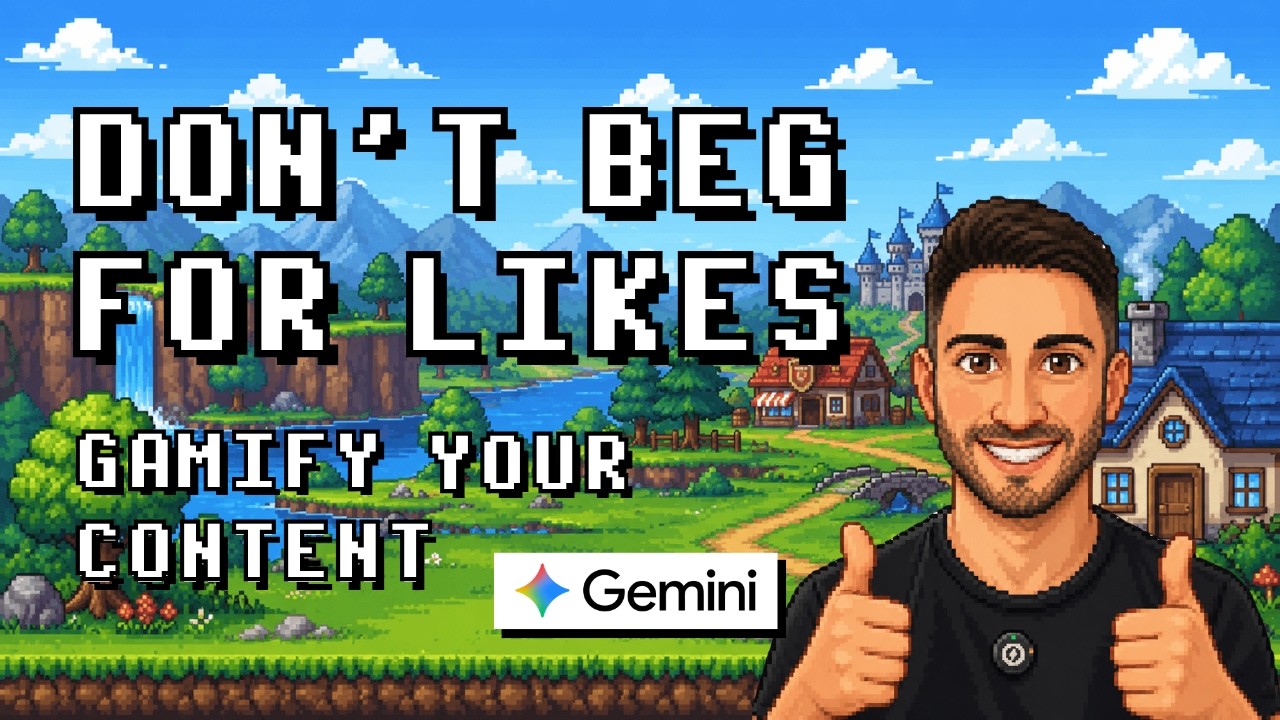
TL;DR: Gamifying a Channel for Growth
- Looking like every other channel is a growth ceiling, not a style choice. Sameness is the thing capping your reach.
- Let the art do the asking. A gamified subscribe beats shouting "smash that button" one more time.
- AI collapsed custom animation from weeks to one afternoon. The cost of standing out just dropped to almost nothing.
- When you do not know the tool, make it prompt itself. Ask the model how to prompt the model.
- Ship the handmade MVP, hire the polish later. Done and yours beats perfect and generic.
Gamifying a YouTube channel is a growth lever most creators leave on the table. This episode is a live design session: I build two animated subscribe buttons, a guy who hammers a keyboard until it flips to subscribed and a magician who casts a spell on the button, using AI video generation and a video editor I barely know. Forget the buttons for a second. The real move is replacing "please subscribe" with art that does the asking, and how cheap AI just made that possible. This article pulls out the principles. The session is the case study.
Why this matters
Open YouTube and scroll. How many videos look the same? Same intro, same "smash the subscribe button," same stock everything. Sameness is comfortable and it is also the reason most channels never break out. I want a channel I would have watched every day as a kid, so I am gamifying it: the playful animations, the pixel-art world on my site, the moments where something happens instead of someone asking. This is where art, gamification, and marketing meet. The pattern I see with the founders I coach is that they treat differentiation as decoration, a thing to add later. That is the mistake. Differentiation is the positioning that makes you stand out, and on a channel, positioning is growth.
#1: Looking like every other channel is a growth problem
The instinct when you start a channel is to copy what works: the same hooks, the same calls to action, the same template thumbnail. It feels safe because everyone else is doing it. That is exactly why it does not work. If you look like the other thousand channels in your niche, the viewer has no reason to pick you, and the algorithm has nothing distinct to reward.
This whole session started because a friend who watched my last episode said:
It would be so cool if there was a little avatar of yourself typing on a keyboard, instead of saying subscribe all the time.
He was naming the gap without knowing it. You do not close it with louder marketing. You close it with a channel that feels like one specific person made it. Mine leans into a retro, gamified world because that is the thing I actually love, and the thing nobody else in my niche is doing.
The portable rule: differentiation is what drives the growth, so build it in first. If your channel could swap logos with a competitor and nobody would notice, that is the problem.
#2: Let the art do the asking
There is a difference between telling someone to subscribe and showing them something that makes them want to. "Smash the like button" is a transaction. A tiny pixel version of me hammering a keyboard until the button flips from subscribe to subscribed is a moment. One interrupts the video, the other is part of the show.
So I designed two. The first is the keyboard-hammer: my avatar pounding the keys until the button changes and disappears. The second is a magician who puffs into frame, waves a wand, turns the red button green, and vanishes in a second puff. Same call to action, zero words. The art carries the marketing.
| Concept | What happens | Why it works |
|---|---|---|
| Keyboard-hammer | Avatar smashes the keyboard, button flips to subscribed, then exits | Reads as energy and effort, matches the build-in-public tone |
| Magician puff | Wizard appears in smoke, casts a spell, button turns green, vanishes | Playful surprise, the "magic" frames subscribing as a reward |
The portable rule: convert the ask into an experience. People skip instructions and remember moments.
#3: AI just made custom animation cheap enough to bother
The reason this used to be rare is cost. Custom animated brand moments took weeks and a motion designer most creators cannot justify. That math flipped. I prompted the keyboard animation in Gemini, generating Veo video, and had a usable version in an afternoon, not a sprint. The first outputs were buggy and forgot my avatar. I fed it my avatar, ran it again, and the third pass was good enough to ship.
Here is the move that unlocked it, and it is the one most people miss: when you do not know a tool well, make the tool teach you. I am not fluent in Gemini, so in a separate chat I asked it to write the prompt for me. "I want an animation that does this, write me a good Veo prompt." Then I ran the prompt it gave back. The model is better at speaking to itself than I am.
The portable rule: the barrier to custom brand art used to be skill and budget. Now it is just whether you bother to prompt. When the tool is unfamiliar, ask it to prompt itself.
#4: Ship the handmade MVP, hire the polish later
Everything on my site is handcrafted, the Mario-style tunnels, the buttons, the Game Boy, the heart. I built all of it by hand when I redesigned the site, because I refuse to ship stock designs that make me look like everyone else. Canva is good, but a finished Canva template is not a brand. The redraw of the subscribe bell into my pixel style, by hand in Canva, was non-negotiable for the same reason.
That said, this is an MVP and I treated it like one. The animation is not perfect. It rises from the bottom of the frame when I would rather it appear the way it disappears, and I left a small flaw in rather than burn another of my three daily generation attempts. If I were doing it again, I would lock the entry and exit motion in the prompt before editing, instead of fixing it in post. The goal is to make it happen first, ship it, and hire a designer for the last ten percent once the channel earns it. This is the build-in-public discipline I bring to my product coaching: ship the rough, real version, then polish what the numbers tell you to.
The portable rule: handcraft the brand, ship the MVP, hire the polish later. Generic and perfect loses to rough and yours.
What is next
I will wire these animations into the actual videos and watch whether the gamified subscribe moves the subscribe rate at all. That is the real test of "art as marketing," and I will report the number, good or bad. The last episode, on making AI writing sound human, was the same idea applied to words instead of pixels: make the thing sound and feel like you, not like the default. Subscribe so the results land when they are in.
Grab everything I built in this episode

3 PROMPTS TO DOWNLOAD